
Source green house solutions on a global market from best suppliers 2027
Source green house solutions |Global market best suppliers 2027. Greenhouse solutions sourcing on the global market involves identifying and purchasing reliable greenhouse products, equipment, and technologies from international manufacturers and suppliers. Greenhouse solutions are an important part of modern agriculture, providing controlled growing environments that help protect crops from unfavorable weather conditions, regulate temperature and humidity, and support year-round agricultural production where suitable growing conditions can be maintained.
The global market offers access to a wide range of greenhouse solutions from manufacturers and suppliers in countries such as China, the UAE, Japan, Germany, and other international markets. Through global sourcing, farmers, agricultural investors, and commercial growers can compare different products, evaluate quality, and identify suitable solutions based on their budgets and farming requirements.
As a professional sourcing agency, Jesaka sourcing agency, the global sourcing and procurement logistics offers perfect solutions for sourcing green house solutions on a global market. It helps clients to source suitable greenhouse solutions according to their project requirements, budget, farm size, crop type and environmental conditions. Therefore in this case we connect buyers with international suppliers, helping them to identify suitable products and also compare quotations.
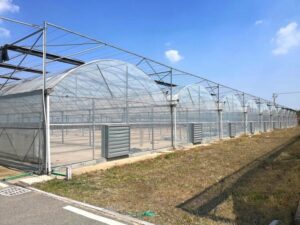
Types of green house structures available on the global market
There are various types of greenhouse structures that are designed to meet specific agricultural needs. To select the right type depends on the crop, climate, available space, budget and intended production capacity
Multi span greenhouse structures
These consists of several connected growing sections supported by a shared structural frame work. These are suitable for commercial farming projects requiring larger growing areas and others
Tunnel greenhouse structures
The tunnel greenhouse feature curved frames covered with plastic film. These are commonly used for growing tomatoes, peppers, cucumbers, leafy vegetables, and other horticultural crops. Their simple design and relatively affordable installation
Velno greenhouse structures
These typically feature a modular steel or aluminum framework with a glass roof. They are often used in advanced commercial horticulture because they can support controlled growing environments, efficient light transmission and automated climate management system
Shade net greenhouse structures
Shade net structures use specialized netting to reduce direct sunlight, regulate light intensity, and provide some protection against insects and wind. These are particularly useful for nurseries, seedlings, ornamental plants and crops the require partial shade
Polycarbonate greenhouse structures
These greenhouse use polycarbonate panels as covering materials. These panels provide durability and impact resistance while allowing light to enter. They are suitable for nurseries, commercial farms, and agricultural projects that may require a durable alternative to conventional plastic film
Why source green house structures from the global market
The global sourcing gives agricultural businesses access to a wider selection of greenhouse technologies, structural designs, materials and suppliers
Some of the key benefits include
Customized designs: Source greenhouse structures according to farm size, crop type, site conditions and production goals
Access to global manufacturers: Compare suppliers from countries such as China, Turkey, India and other established manufacturing markets
Scalable solutions: Find structures for small farms, commercial greenhouses, nurseries and large agricultural projects
Quality assurance: Evaluate materials, manufacturing standards, protective coating and structural specification before buying
Access to modern technology: Source structures compatible with automated ventilation, irrigation, fertigation, and climate control equipment
A detailed process for sourcing green house solutions
Identify Your Greenhouse Requirements
We establish your farming needs by considering the intended crops, greenhouse dimensions, installation location, production capacity, climate conditions, preferred materials, and budget.
Identify Reliable Global Suppliers
We identify suitable global suppliers and manufacturers offering greenhouse solutions that meet your requirements, focusing on design, material quality, equipment specifications, pricing, minimum order quantities, warranty terms, and delivery timelines.
Compare Specifications and Quotations
We compare supplier quotations based on greenhouse designs, material durability, technical specifications, pricing, minimum order quantities, warranty coverage, and production lead times to help you make informed procurement decisions.
Verify Product Quality and Supplier Information
We help assess supplier credentials, available technical documentation, product specifications, and relevant certifications where applicable to support quality assurance and reliable sourcing decisions.
Coordinate Procurement and Shipping
Once the supplier and products are approved, we coordinate the procurement process and assist with shipping arrangements, required documentation, and international delivery to your preferred destination.

Important factors to consider when sourcing greenhouse structures
The buyers should consider the following
Structural strength: This requires reviewing frame dimensions, material thickness, connections, anchoring, and engineering calculations
Climate suitability: The structure should be designed for local wind speeds, rainfall, temperatures and other environmental conditions
Dimension and layout: Confirm the length, width, height, number of spans, and available growing areas.
Ventilation: Consider roof vents, side vents insect screens and mechanical ventilation where required
Irrigation compatibility: Make sure the green house can accommodate drip irrigation sprinklers, fertigation and water distribution equipment as needed
Installation and maintenance: Check assembly requirements, local technical support, replacement parts and ongoing maintenance costs
Total landed cost: Consider the product price, freight, insurance, customs duties, taxes, foundations, installation and any required permits