Irrigation System Sourcing | Quality, Efficiency & Reliable Supply
Irrigation System Sourcing | Quality, Efficiency & Reliable Supply: Irrigation system sourcing involves identifying and procuring high-quality irrigation equipment from reliable manufacturers and suppliers. Modern irrigation systems play an important role in improving agricultural productivity, conserving water, and making farming operations more efficient. By ensuring a consistent water supply to crops, farmers can improve water management and support healthy crop growth.
Various irrigation systems are available to meet different agricultural needs, including drip irrigation, sprinkler irrigation, surface irrigation, and centre-pivot irrigation. The equipment required may include water pumps, pipes, filters, pressure regulators, valves, sprinklers, drip lines, emitters, fittings, and water distribution components.
A successful irrigation project depends not only on proper installation but also on sourcing the right equipment from reliable suppliers. High-quality irrigation equipment helps improve system performance, minimize water loss, reduce leakage and blockages, and support long-term agricultural productivity.
Work with a reliable sourcing partner like Jesaka Sourcing Agency, a global sourcing and procurement logistics company in Africa. We help businesses and agricultural projects source equipment and materials from suppliers and manufacturers across China, the UAE, India, Turkey, Europe, and other markets. Our sourcing approach focuses on product specifications, supplier verification, quality requirements, competitive quotations, and reliable procurement logistics.
Understanding Irrigation System Sourcing
Irrigation system sourcing is the process of identifying, evaluating, selecting, and purchasing suitable irrigation equipment from qualified manufacturers and suppliers. It involves understanding the project’s requirements and matching them with equipment that meets the farm’s size, crop types, water source, soil conditions, terrain, and irrigation needs.
So whether you need individual irrigation components or a complete system for a small farm, commercial agricultural operation, greenhouse, or large-scale farming project, proper sourcing helps ensure that the selected equipment meets your technical and operational requirements.
A typical irrigation system may include:
Water pumps: Move water from wells, rivers, reservoirs, tanks, or other water sources to the irrigation network.
Pipes and pipelines: Transport water from the source to the fields and distribute it across the farm.
Filters: Remove sediment and other particles that could block irrigation components.
Pressure regulators: Maintain suitable operating pressure for efficient water distribution.
Valves and fittings: Control water flow and connect different system components.
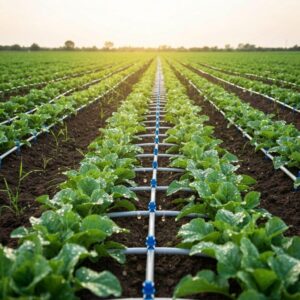
Drip lines and emitters: Deliver water directly to the root zones of crops in drip irrigation systems.
Sprinklers: The sprinkler systems Distribute water over crops through controlled spraying.
Control systems: Support the management of irrigation schedules, water flow, and, where appropriate, automated operation.
The exact components depend on the selected irrigation method, the water source, and the project’s design.
How to Source a Quality Irrigation System
To source a reliable irrigation system, it is important to follow a structured procurement process.
Assess Your Irrigation Requirements
Before purchasing equipment, determine the farm size, crop types, field layout, soil characteristics, water source, terrain, and expected irrigation schedule. These factors influence the system design, equipment capacity, and technical specifications.
Identify Reliable Manufacturers and Suppliers
Work with manufacturers and suppliers who have experience producing agricultural irrigation equipment. Evaluate their product range, manufacturing capabilities, quality-control procedures, and ability to meet your project’s requirements.
Request technical specifications, product catalogues, applicable certifications, warranty information, and references where appropriate. Supplier verification also helps reduce the risks associated with unreliable products and misleading offers.
Compare Product Specifications
Do not select irrigation equipment based on price alone. Compare the technical features that determine whether the equipment will perform effectively under your operating conditions.
Important specifications include pipe diameter, material strength, pump capacity, operating pressure, water flow rate, filtration capacity, emitter spacing, sprinkler coverage, connection sizes, and resistance to corrosion or environmental conditions.
Ensure that the selected components are compatible and suitable for the intended irrigation method.
Assess Water Quality and Availability
Water quality is an important consideration when selecting irrigation equipment. Water containing sediment, organic matter, or dissolved minerals may cause blockages, scaling, or premature wear.
Assess the water source and select suitable filtration and treatment equipment where necessary. You should also confirm that the available water supply can meet the farm’s irrigation demand throughout the growing season.
Request a Complete Irrigation System Design
For commercial farms and large agricultural projects, sourcing should ideally be based on a properly designed irrigation system rather than purchasing components independently.
A suitable design helps ensure that pumps, filters, pipes, valves, pressure regulators, sprinklers, and drip lines work together efficiently. It should also consider field elevation, water demand, operating pressure, and the required distribution network.
A coordinated system can help minimize water losses, improve coverage, and simplify installation and maintenance.
Evaluate the Total Cost of Procurement
When sourcing an irrigation system, consider the overall cost rather than focusing only on the initial purchase price.
Evaluate equipment prices, transportation, import duties where applicable, installation, spare parts, maintenance, replacement components, and operating costs. For international procurement, also consider delivery schedules, shipping arrangements, and the documentation required for importation.
Inspect Equipment Before Delivery
Before accepting an order, confirm that the supplied equipment matches the agreed specifications, quantities, and quality requirements. Depending on the project, this may involve reviewing product documentation, checking samples, inspecting components, or arranging an independent quality inspection.

Advantages of Using a Proper Irrigation System
Sourcing a quality irrigation system helps farmers manage water efficiently, improve crop growth, and reduce long-term farming costs. A well-designed system delivers water according to crop requirements, soil conditions, and farm size.
Efficient Water Management: A suitable irrigation system distributes water where it is needed, helping to reduce unnecessary water consumption.
Reduced Water Losses: Properly selected irrigation equipment minimizes water losses caused by runoff, leakage, and evaporation.
Improved Crop Growth: Consistent water supply helps maintain suitable soil moisture levels, supporting healthy root development and better crop growth.
Uniform Water Distribution: Quality pipes, sprinklers, pumps, and other irrigation components help distribute water evenly across the farm.
Reduced Blockages and Maintenance: Suitable filters and well-matched components help prevent blockages, minimize breakdowns, and reduce maintenance requirements.
Lower Operating Costs: Efficient irrigation equipment can reduce water waste, energy consumption, repair expenses, and replacement costs over time.
Long-Term Durability: Reliable materials and properly selected components help ensure the irrigation system performs effectively under different farming conditions.
Flexibility for Different Farms: A properly sourced irrigation system can be selected to suit different crops, field sizes, soil types, water sources, and agricultural needs.
Why Choose Jesaka Sourcing Agency for Irrigation System Sourcing?
Jesaka Sourcing Agency supports businesses, farmers, contractors, and agricultural projects seeking suitable irrigation equipment from international markets. Our sourcing and procurement logistics approach helps clients identify products that match their technical requirements and purchasing objectives.
Our services can support:
Sourcing irrigation equipment from international manufacturers and suppliers.
Identifying suitable products according to project specifications.
Comparing supplier quotations, product quality, and delivery terms.
Coordinating procurement documentation and shipping arrangements.
Supporting equipment sourcing for farms, greenhouses, commercial agriculture, and larger irrigation projects.
Sourcing related agricultural equipment, pumps, pipes, water tanks, and other farming supplies.
By focusing on quality requirements, supplier verification, and procurement coordination, we help clients make more informed sourcing decisions.
A Detailed Process for Sourcing the Best Irrigation Systems
Identify Suitable Suppliers
We identify reliable suppliers and manufacturers offering irrigation systems that match your farm’s needs, budget, and water requirements.
Compare Systems and Quotations
We compare irrigation systems based on specifications, efficiency, quality, pricing, and supplier terms to help you choose the best option.
Verify Specifications and Suppliers
We verify system specifications and supplier information to support reliable purchasing decisions.
Inspect Equipment Where Required
Where necessary, we arrange inspections to assess the quality, functionality, durability, and condition of irrigation components.
Arrange Shipment and Delivery
Once you approve the selected system and supplier, we assist with purchasing, shipping arrangements, and delivery to your preferred destination.
In Conclusion
Irrigation System Sourcing | Quality, Efficiency & Reliable Supply. Choosing the right irrigation system is essential for improving water management, supporting healthy crop growth, and increasing agricultural productivity. At Jesaka Sourcing Agency, we help farmers, agricultural businesses, and irrigation project developers source reliable, high-quality irrigation systems that meet their specific requirements, budgets, and operational needs.
FAQS
1 What equipment is included in an irrigation system?
Irrigation systems may include water pumps, pipes, filters, valves, sprinklers, drip lines, emitters, fittings, controllers, and water storage components. The equipment required depends on the irrigation method, water source, and farm size.
2. How do I choose the right irrigation system for my farm?
Consider your crop type, farm size, soil conditions, water availability, terrain, budget, and water pressure. A suitable system should provide uniform water distribution while minimizing water losses and maintenance requirements.
3 How much does an irrigation system cost?
The cost depends on the irrigation method, farm size, equipment quality, automation level, water requirements, and transportation expenses. Requesting quotations based on your specifications helps you compare options and estimate the total project cost.
4. Can I customize an irrigation system to meet my requirements?
Yes. Many manufacturers offer irrigation solutions tailored to crop type, field size, water flow, pressure requirements, pipe dimensions, automation needs, and other project specifications.